This article explains how UVC water disinfection inactivates microorganisms in...
When even the “last drop of water” must be safe and controllable, traditional mercury lamps are increasingly unable to meet modern water treatment demands. Compact, high-efficiency UVC LED water disinfection systems are rapidly emerging as a key upgrade solution for both point-of-use purification and whole-house disinfection.
Many people assume that once water has passed through reverse osmosis (RO), activated carbon, or fine filtration, it is completely safe. In reality, after leaving the core purification unit, water still passes through storage tanks, pipelines, valves, and faucets—where microorganisms can continue to grow.
For residential, hospitality, medical, and commercial drinking water systems, this kind of “secondary contamination at the point of use” is often more easily overlooked than contamination in the source water.
That’s why more systems are now placing microbial control on the same level of importance as contaminant removal. The value of UVC LED water disinfection lies in its ability to provide continuous, stable, and chemical-free protection at the final stage of the water pathway.
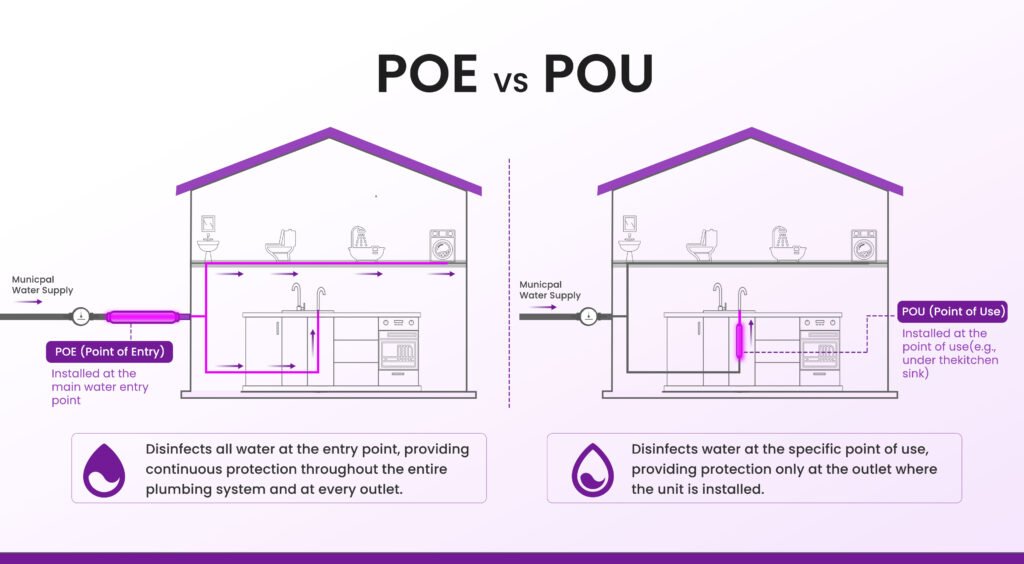
When selecting a disinfection solution, the first key question is: are you protecting a single point of use, or the entire water supply system?
POU (Point of Use) refers to disinfection at the point where water is consumed. It is typically installed under kitchen sinks, in countertop purifiers, water dispensers, or baby formula systems. It is ideal for drinking, cooking, and other high-quality water applications, focusing on “last-mile” safety.
POE (Point of Entry) refers to disinfection at the main water inlet. It protects the entire household or building water supply, including kitchens, bathrooms, laundry systems, and hot water systems, aiming to block microorganisms from entering the internal plumbing network.
Low-pressure mercury lamps have long dominated UV water disinfection, but their limitations are becoming increasingly evident:
Require warm-up time and lack flexible start/stop operation.
Contain mercury, posing environmental and regulatory concerns.
Bulky and difficult to integrate into compact systems.
Subject to performance degradation, frequent maintenance, and complex thermal management.
In contrast, UVC LEDs offer clear advantages:
Instant on/off operation.
Compact size and flexible integration.
Long lifespan and low energy consumption.
Precise control and mercury-free design.
For space-constrained, intermittent-use, and energy-sensitive applications, UVC LEDs are far better suited than traditional lamp-based systems.
“Compact” is not just about smaller size—it means better integration into real-world applications. For modern water treatment devices, this translates into stronger product integration and broader application possibilities.
Key benefits include:
Easy integration into existing purification devices and piping systems.
Suitability for space-limited installations.
Simplified maintenance and reduced operational costs.
Modular scalability for different flow rates and use cases.
Compatibility with mobile, decentralized, and off-grid water systems.
For brands, these systems not only enhance performance but also create strong differentiation and improve conversion potential.
“Compact” is not just about smaller size—it means better integration into real-world applications. For modern water treatment devices, this translates into stronger product integration and broader application possibilities.
Key benefits include:
Easy integration into existing purification devices and piping systems.
Suitability for space-limited installations.
Simplified maintenance and reduced operational costs.
Modular scalability for different flow rates and use cases.
Compatibility with mobile, decentralized, and off-grid water systems.
For brands, these systems not only enhance performance but also create strong differentiation and improve conversion potential.
POE systems are designed for larger-scale water treatment and are ideal for villas, apartments, hotels, clinics, buildings, and small commercial facilities.
Installed at the main water inlet, they disinfect water before it enters the building, protecting all downstream usage points.
This approach is particularly valuable in environments with high safety requirements, such as:
Hot water systems.
Water storage systems.
Centralized supply systems.
Networks prone to secondary contamination.
For applications requiring stable, continuous, and high-flow disinfection, POE offers a more comprehensive and systematic solution than point-based systems.
Compact, high-efficiency UVC LED water disinfection systems are rapidly expanding across multiple sectors, including:
Residential purification and drinking water systems.
Hotels, resorts, and premium housing.
Medical and laboratory water systems.
Commercial dispensers and foodservice equipment.
Industrial process and auxiliary water systems.
Remote and off-grid water supply applications.
These sectors share common needs: reliable microbial control, compact system design, low maintenance, and easy integration—all of which UVC LED technology effectively delivers.
From an environmental perspective, UVC LEDs are mercury-free, require no chemical dosing, and do not produce disinfection byproducts. This makes them highly attractive for companies prioritizing green manufacturing, low-carbon operations, and regulatory compliance.
Operationally, they also offer lower energy consumption and reduced maintenance, resulting in a lower total cost of ownership and greater acceptance among end users.
Future Development Trends
As UVC LED efficiency improves and costs continue to decline, these systems will evolve toward greater intelligence, modularity, and platform-based design.
By integrating sensors, IoT control, and remote monitoring, water disinfection systems will shift from standalone components to fully manageable system nodes.
For companies entering high-end purification, commercial water treatment, or OEM/ODM markets, now is a critical window to build content authority and brand trust around UVC LED solutions. Those who can clearly communicate technology value, application scenarios, and reliability will gain a strong competitive advantage.
This article explains how UVC water disinfection inactivates microorganisms in...
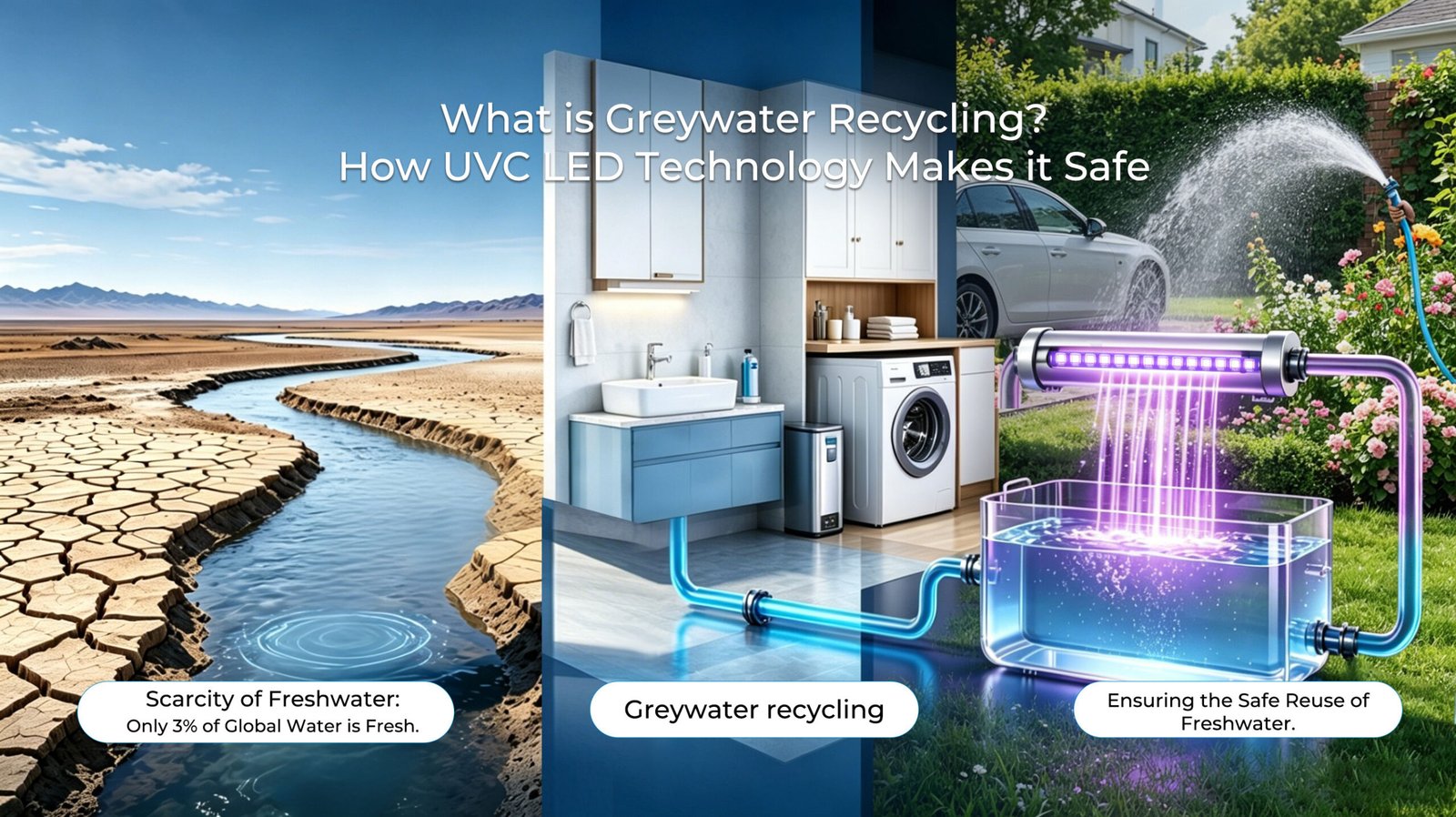
With only 3% of the world's water being fresh, the...
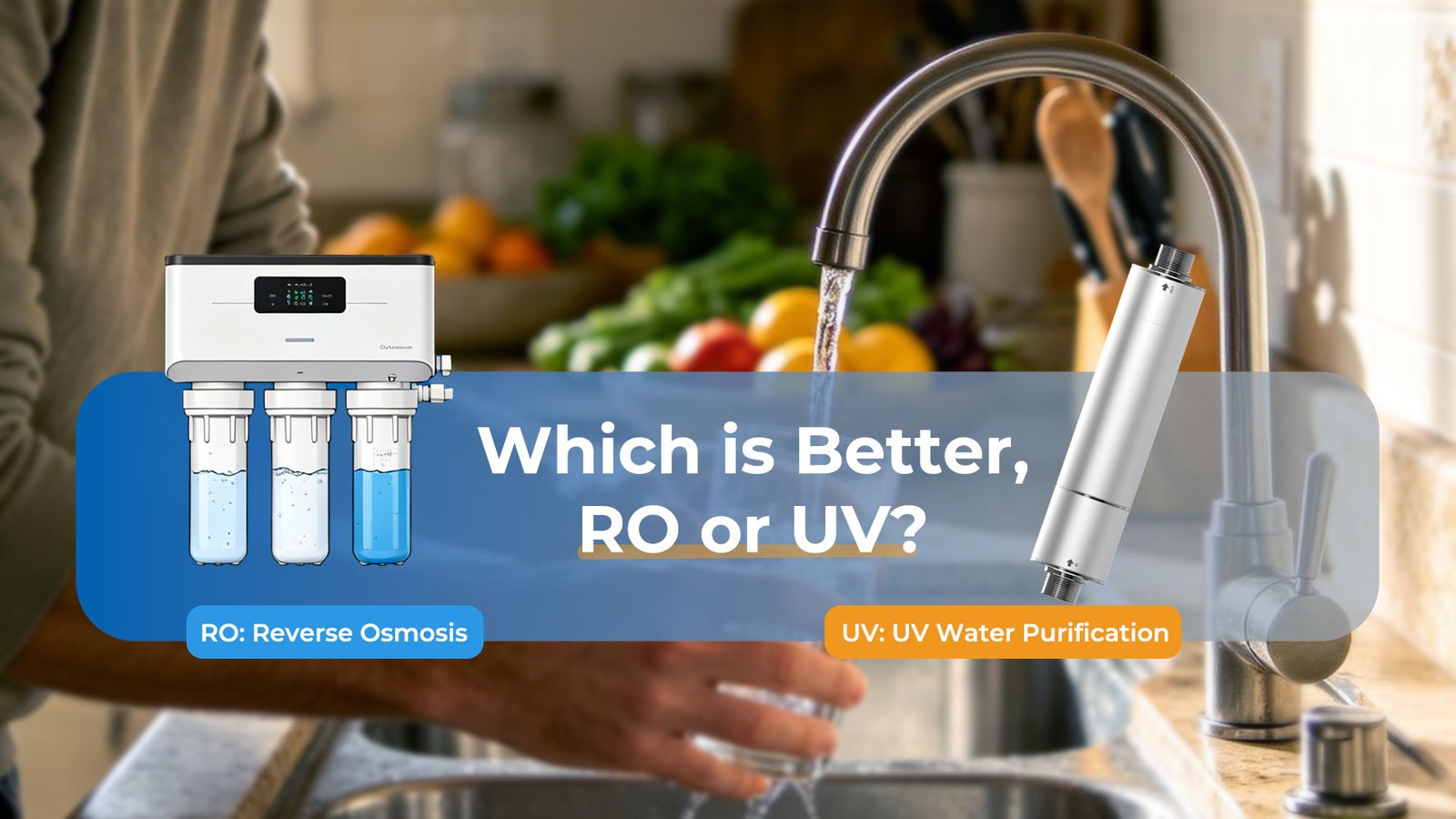
"This article is designed to help consumers make informed decisions...
Be the first to get our R&D updates, case studies, and engineering resources—subscribe now.
© 2026 INSTAUV LLC. All Rights Reserved.
We’re here to help! Reach out with any questions you may have.