Get in Touch

We’re here to help! Reach out with any questions you may have.

Contact Us Form
Edit Template

Single Events

Bolg

Why UVC LED is the Ideal Addition to Under-Sink RO Systems

Under-Sink RO Systems

Under-sink (Under-Sink) reverse osmosis (RO) water purifiers are a popular choice for household drinking water purification. They effectively remove heavy metals, TDS, organic compounds, and most contaminants. However, RO membranes cannot completely block all microorganisms, and secondary contamination can occur in storage tanks or pipelines (e.g., bacterial growth). UVC LED technology serves as an excellent final-stage physical disinfection solution, achieving 99.99% to 99.999% (4-5 log) microbial inactivation without altering taste, adding chemicals, or leaving residues.

Compared to traditional mercury lamps, UVC LED offers significant advantages: mercury-free and environmentally friendly, instant on/off (no warm-up time), compact size (easy to integrate), long lifespan (tens of thousands of hours), low energy consumption (operates on demand), and tunable wavelength (optimized around 265 nm for superior germicidal performance). These features make it perfectly suited for the limited space and intermittent water usage patterns of under-sink RO systems.

Typical Integration Positions of UVC LED in Under-Sink RO Systems

Depending on the system type (with tank vs. tankless instant-filtration), UVC LED modules are usually integrated as the last stage or point-of-use (POU) disinfection step to ensure final treatment before water reaches the faucet. Common integration schemes include:
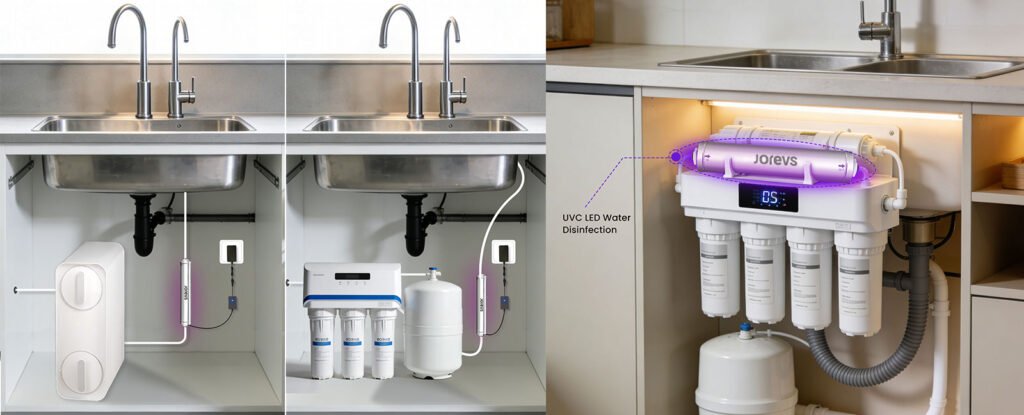
1. After the Storage Tank Outlet (for tank-based RO systems):

  • Water flow path: RO membrane → Post-activated carbon filter → Storage tank → UVC LED module → Faucet.
  • Advantages: Prevents bacterial proliferation during prolonged storage in the tank; disinfects water immediately as it exits the tank.
  • Ideal for: Traditional tank-style RO purifiers where water may sit for hours or overnight.

2. After Post-Filters, Before the Faucet (Most Recommended POU Solution)

  • Water flow path: RO membrane → Post-carbon/mineralization filter → UVC LED module → Faucet.
  • Advantages: Shortest distance to the point of use, minimizing non-disinfected pipe length and reducing “first-cup” contamination risk; highly suitable for tankless RO systems.
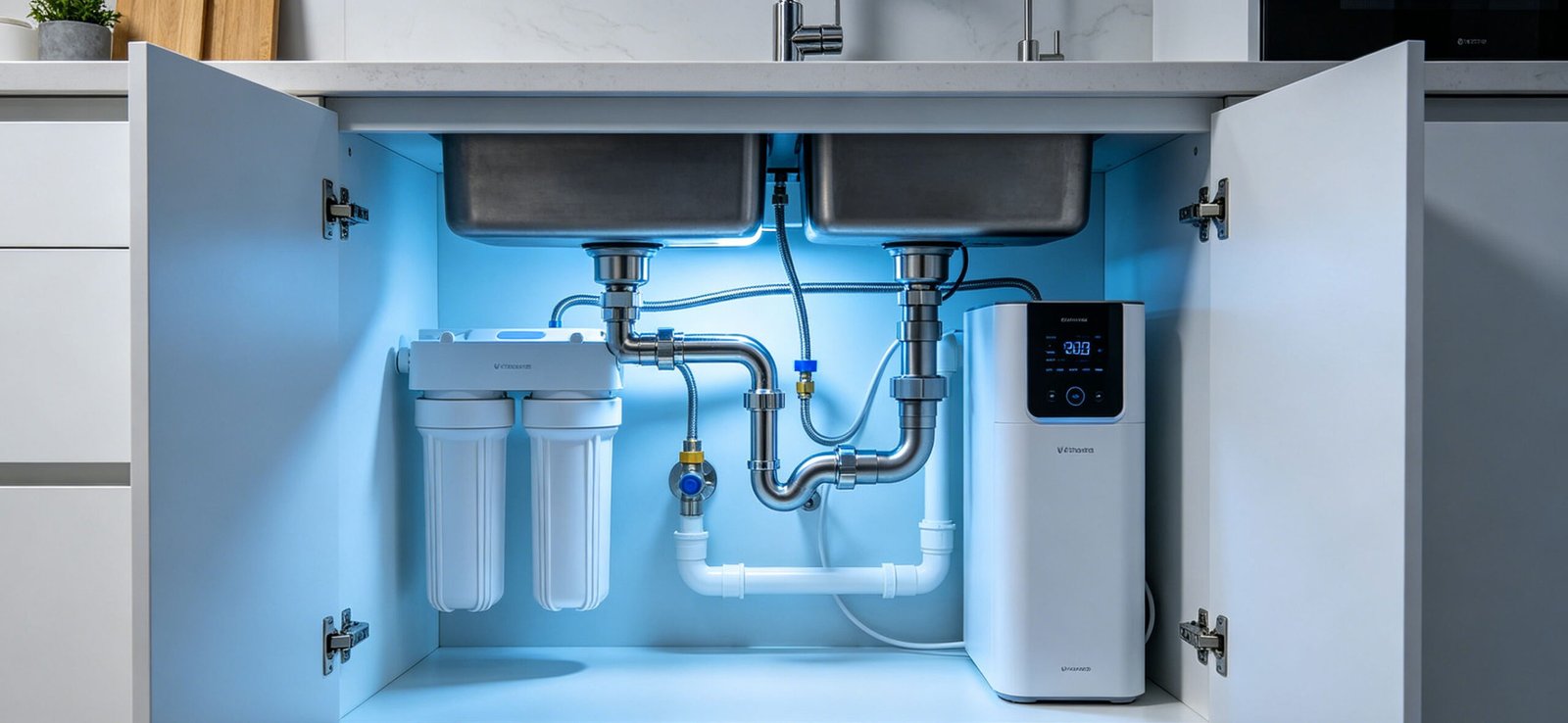
  • Features: The module is installed in the cabinet piping, providing real-time disinfection as water flows through.

3. Inline at the Faucet End (Embedded or Inline Module)

  • Water flow path: Directly integrated inside the faucet or at the connection between the pipe and faucet.
  • Advantages: Closest to the usage point for maximum effectiveness; extremely compact with no extra space required.
  • Ideal for: Modern tanklelss high-flow RO systems or designs requiring ultra-compact integration.

4. Mid-Pipeline Integration (Flexible Retrofit Option)

  • Using T-fittings or quick-connect inline adapters inserted into key points of the main water line.
  • Suitable for: Upgrading existing RO systems with a UVC LED add-on module.

UVC LED module integrated in under sink RO water purifier system

Many commercial products already offer UVC LED as optional post-treatment modules (e.g., iSpring UVF series, Waterdrop LED UV, Envig inline purifiers, PureDrop PDR-UVF3), supporting 1/4″ or 3/8″ quick-connect fittings compatible with most under-sink RO systems.

Technical Considerations and Design Details for Integration

Flow-Triggered Control

  • Built-in flow sensor: Automatically activates the UVC LED when the faucet is turned on and shuts off when water stops. This saves energy, extends LED lifespan, and prevents unnecessary heat generation.
  • Pulse or PWM driving: Further optimizes energy efficiency and disinfection performance.

UV Dose and Performance

  • UV Dose (mJ/cm²): For typical under-sink flow rates (0.5–2 L/min), the designed dose is usually 16–50 mJ/cm², ensuring high inactivation rates against E. coli, viruses, Cryptosporidium, and other pathogens.
  • Reactor Design: Water flows through a polished stainless steel or food-grade chamber with LED arrays surrounding a quartz sleeve for uniform irradiation. The chamber must be smooth and dead-zone-free to minimize scaling.

Installation Methods

  • DIY-Friendly: Most inline modules use quick-connect fittings—no cutting or welding required. Can be mounted vertically or horizontally on cabinet walls.
  • Power Supply: Low-voltage DC (safe for household use), often linked with the RO system’s control board.
  • Space Compatibility: UVC LED modules are much smaller than traditional mercury lamps, fitting easily into tight under-sink spaces.

Synergy with RO System

  • RO pre-filtration significantly reduces turbidity, enhancing UVC light penetration.
  • Recommended flow sequence: Multi-stage pre-filters → RO membrane → Post-carbon → UVC LED → Outlet.
  • For tank systems, periodic low-power irradiation inside or at the tank outlet can inhibit biofilm formation.

Real-World Integration Examples and Product References

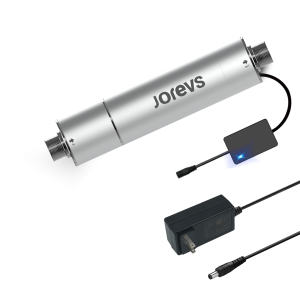
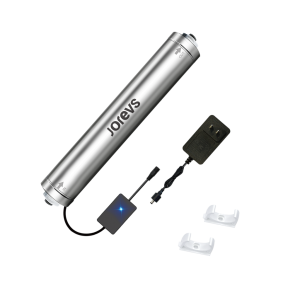
  • Add-on Upgrade Solution: Add a standalone UVC LED module (stainless steel housing, 1/4″ ports) to an existing under-sink RO system, installed between the post-filter and faucet. Installation usually takes less than 10 minutes.
  • All-in-One Integrated Systems: High-end RO purifiers now include built-in UVC LED as the 6th or 7th stage, with fully integrated water pathways for a cleaner, leak-proof design.
  • Tankless Instant-Filtration Systems: UVC LED is especially critical here because there is no storage tank—water flows in real time, requiring high-intensity instant disinfection. Placing the module close to the faucet greatly reduces secondary contamination risk in pipes.
  • Installation Notes:

    • Water flow direction: Usually bottom inlet, top outlet (or follow product markings) to ensure the chamber is fully filled.
    • Pre-treatment: RO output has low turbidity, which is ideal; strengthen pre-filtration if source water is poor.
    • Maintenance: LED lifespan exceeds 20,000 hours; periodically check and clean the quartz sleeve—no frequent lamp replacement needed.
    • Safety: Modules are fully enclosed to prevent UVC leakage; use waterproof power connections.

Advantages and Potential Challenges

Advantages:

  • Purely physical disinfection with no chemical residues, preserving the pure taste of RO water.
  • Instant on/off, perfect for intermittent household use.
  • Mercury-free and eco-friendly, aligning with green appliance trends.
  • High flexibility for easy upgrades to existing systems.

Challenges and Solutions:

  • Water quality impact: High turbidity reduces effectiveness → RO already solves most of this issue.
  • Initial cost: Modules are relatively expensive, but long-term maintenance costs are low.
  • Photoreactivation: Some bacteria may repair DNA under visible light → Use sufficient dose or shielded piping to suppress it.

Conclusion: UVC LED Elevates Under-Sink RO Purifiers to Higher Safety Standards

Integrating UVC LED into under-sink RO water purifiers is an efficient and sustainable way to enhance microbial safety in drinking water. It effectively compensates for RO’s limitations in biological protection, making it especially suitable for households with infants, elderly members, or immunocompromised individuals. As UVC LED technology matures and costs continue to decline, more under-sink RO products will either come standard with or easily support this module, delivering dual “filtration + disinfection” protection for safer, worry-free direct drinking water.

When purchasing or retrofitting, choose products certified by NSF, CE, or national drinking water standards. Refer to actual flow rate and water quality test reports, and consult professional installers if needed. Combined with smart flow sensors and multi-stage filtration, UVC LED will take your under-sink RO system to the next level of intelligence and safety.

About INSTAUV|UVC LED Water Disinfection Technology

INSTAUV is a technology‑driven company specializing in UVC LED water disinfection solutions for home, commercial, and industrial use. Our mission is to make end‑of‑line water sterilization simple, reliable, and chemical‑free by integrating advanced UV‑LED reactors into faucets, purifiers, under‑sink systems, and industrial water‑treatment modules.

We believe that true water safety starts where the water is used—your faucet, your glass, your machine. With UVC LED, INSTAUV brings advanced, hospital‑grade disinfection into everyday environments, from homes and restaurants to factories and field units.

Category

Tags

Most Recent Posts

  • All Post
  • Academic Papers
  • Blogs
  • News & Events

Most Recent Porducts

Contact Us

Contact Us Form

Pure Water, Powered by Advanced UVC LED Technology

Resource Center

Blogs

FAQS

Support

Product Manual

Subscribe for Partnerships

Be the first to get our R&D updates, case studies, and engineering resources—subscribe now.

Newsletter Form (#4)

 © 2026 INSTAUV LLC. All Rights Reserved. 

Get in Touch

We’re here to help! Reach out with any questions you may have.
Contact Us Form
Edit Template