Approx. 6-minute read | May 27, 2026
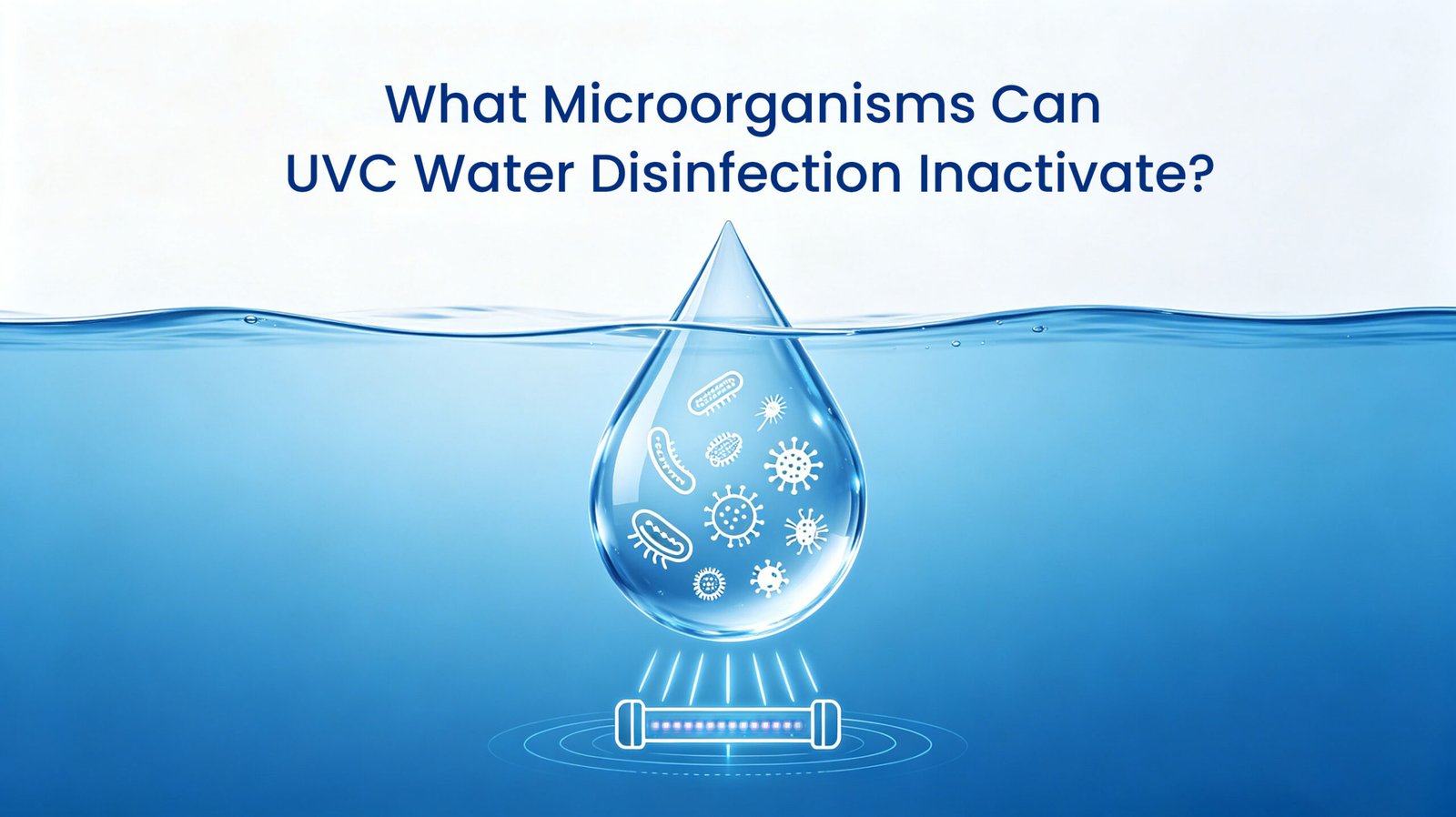
UVC water disinfection is widely recognized as a highly effective, chemical-free method for inactivating a broad range of waterborne pathogens. This article explains which microorganisms can be inactivated by UVC, how the process works, what factors affect performance, and what you should consider in real-world applications.
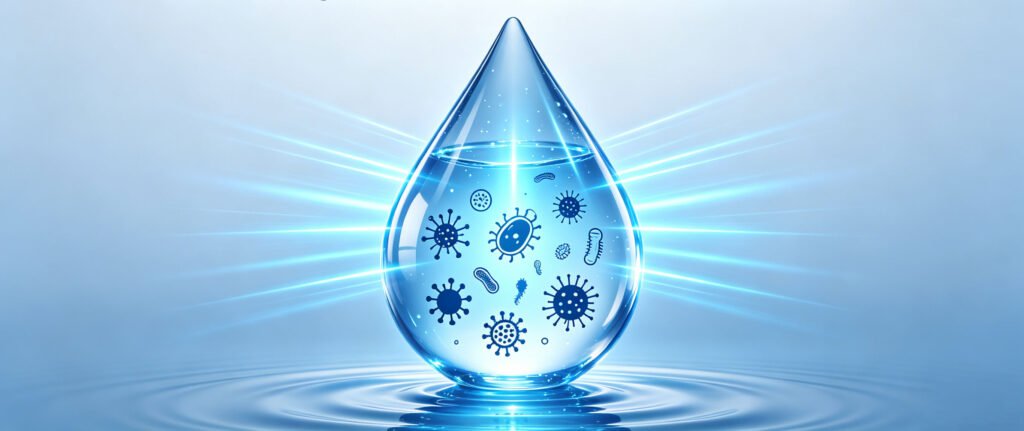
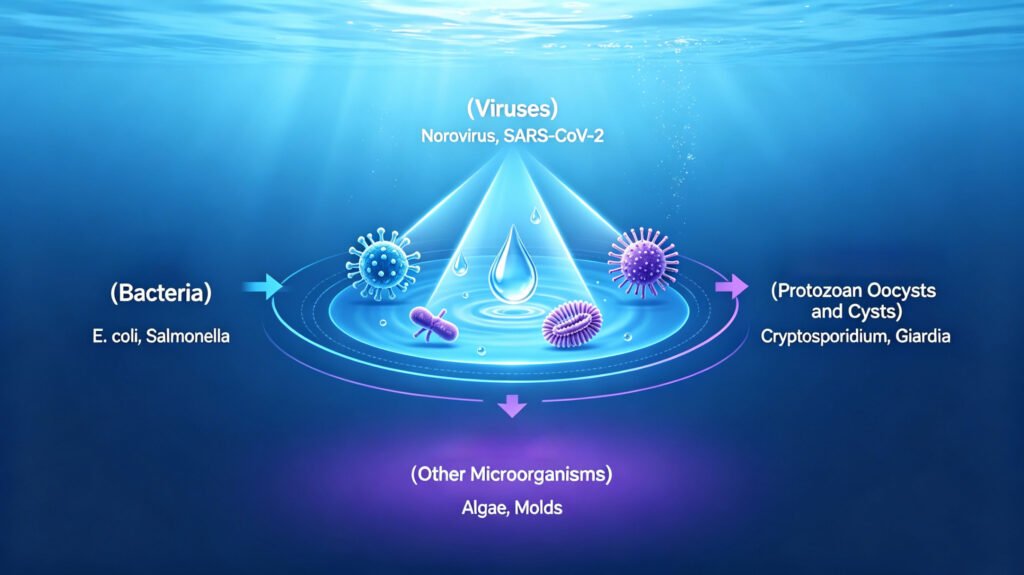
Waterborne pathogens fall into three main categories, each with distinct structures and resistance to disinfection:
Viruses: Non-cellular pathogens like adenovirus, norovirus, and hepatitis A. They consist mainly of RNA or DNA wrapped in a protein coat. Viruses generally require lower UVC doses than protozoa but may be more resistant than some bacteria.
Protozoa: Larger, single-celled parasites such as Cryptosporidium and Giardia. These organisms have thick outer walls and are among the most UVC-resistant pathogens in water.
The sensitivity of microorganisms to UV light follows this general order:
virus < bacteria < Cryptosporidium < Giardia
Understanding these differences is critical for designing UVC water disinfection systems that achieve the desired log reduction for target pathogens.
UVC water disinfection, especially in the 265–280 nm (UVC LED) ranges, is effective against a very broad spectrum of microorganisms:
Bacteria:
E. coli, Enterococcus, Pseudomonas aeruginosa
Legionella pneumophila
Salmonella, Campylobacter, Helicobacter pylori
UVC can achieve 3–5 log reduction (99.9–99.999%) with appropriate doses.
Viruses:
Adenovirus types 40 and 41 (most UV-resistant viruses in water)
Norovirus, Rotavirus, Hepatitis A, SARS-CoV-2
UVC inactivates viruses by damaging their RNA/DNA, preventing replication.
Protozoan Oocysts and Cysts:
Cryptosporidium parvum
Giardia lamblia
These are highly resistant to chlorine but can be effectively inactivated by UVC at proper doses.
Other Microorganisms:
Algae
Molds and spores
Some bacterial spores (require higher doses)
UVC is especially valuable because it can inactivate chlorine-resistant pathogens like Cryptosporidium and Giardia, which traditional chlorination struggles to control.
The effectiveness of UVC microbial inactivation depends on multiple factors:
1. UVC Dose (Intensity × Time)
UVC dose is the product of irradiation intensity (mW/cm²) and exposure time (seconds), expressed as mJ/cm².
Higher doses = higher log reduction.
Different microorganisms require different doses. For example:
E. coli: ~16.9 mJ/cm² for 2-log reduction; ~24 mJ/cm² for 3-log reduction.
Spores may require ~70 mJ/cm², while some bacteria only need ~30 mJ/cm².
2. Water Quality: UVT (Ultraviolet Transmittance)
UVT measures how well UV light passes through water.
Higher UVT = better disinfection performance.
Low UVT caused by turbidity, color, dissolved organic matter, iron, or manganese reduces effective dose.
3. Turbidity and Suspended Solids
Particles can shield microorganisms from UVC.
High suspended solids (SS) significantly reduce disinfection efficiency.
4. Flow Rate and Hydraulic Design
Higher flow rates reduce residence time, lowering effective dose.
Reactor design (chamber geometry, lamp placement) affects uniformity of exposure.
5. Microbial Factors
Different species and strains have different UV absorption peaks.
E. coli and DNA: ~265 nm
Cryptosporidium: ~261 nm
Bacteriophage: ~271 nm
Some microorganisms can repair UV damage (photoreactivation) if exposed to visible light after treatment, especially at low doses.
When designing or operating UVC water disinfection systems, keep these practical points in mind:
1. Pre-Filtration Is Essential
Remove turbidity, iron, manganese, and large particles before UVC treatment.
A typical setup: sediment filter → carbon filter → UVC reactor.
This improves UVT and protects the UVC chamber/sleeve from fouling.
2. Ensure Adequate Dose for Target Pathogens
Design for the most resistant pathogen you need to control (often Cryptosporidium or adenovirus).
Use safety margins to account for lamp aging, fouling, and water quality fluctuations.
3. Monitor and Maintain the System
Regularly check:
UVC intensity (via sensors if available)
Quartz sleeve cleanliness
Lamp or UVC LED output degradation
Replace lamps/LEDs according to manufacturer recommendations.
4. Avoid Photo-Reactivation Risks
Ensure sufficient UVC dose to minimize the chance of microbial repair.
Avoid exposing treated water to strong visible light immediately after UVC if possible, or design for high enough dose that reactivation is negligible.
5. Combine with Other Treatment Steps When Needed
UVC is excellent for disinfection but does not remove chemicals, heavy metals, or dissolved solids.
Combine UVC with:
Reverse osmosis (RO)
Activated carbon
Ion exchange
depending on water quality and application.
UVC can inactivate a very broad range of microorganisms, including bacteria, viruses, and protozoa like Cryptosporidium and Giardia. However, the required dose varies by organism. Some resistant spores and certain viruses (e.g., adenovirus) need higher doses for reliable inactivation.
In general, protozoan oocysts such as Cryptosporidium and Giardia are among the most UVC-resistant waterborne pathogens. Among viruses, adenovirus types 40 and 41 are notably more resistant than many other viruses.
With sufficient UVC dose and good water quality, most bacteria and many viruses can be inactivated within seconds. For example, at 30 mW/cm², almost 100% of most bacteria can be killed in about 1 second. However, the exact time depends on intensity, dose, and microorganism type.
At low UVC doses, some microorganisms can repair UV-damaged DNA/RNA through photoreactivation when exposed to visible light. Using adequate UVC dose and proper system design minimizes this risk.
No. UVC is a disinfection technology that inactivates microorganisms by damaging their nucleic acids. It does not remove chemicals, heavy metals, dissolved solids, or odors. For comprehensive water treatment, UVC should be combined with other processes like RO or activated carbon
The most effective wavelength for microbial inactivation is around 260–265 nm, where DNA/RNA absorption peaks. Traditional mercury UV lamps emit at 254 nm, while UVC LEDs can target 265–280 nm, both effective for water disinfection.
Be the first to get our R&D updates, case studies, and engineering resources—subscribe now.
© 2026 INSTAUV LLC. All Rights Reserved.
We’re here to help! Reach out with any questions you may have.