Get in Touch

We’re here to help! Reach out with any questions you may have.

Contact Us Form
Edit Template

Single Events

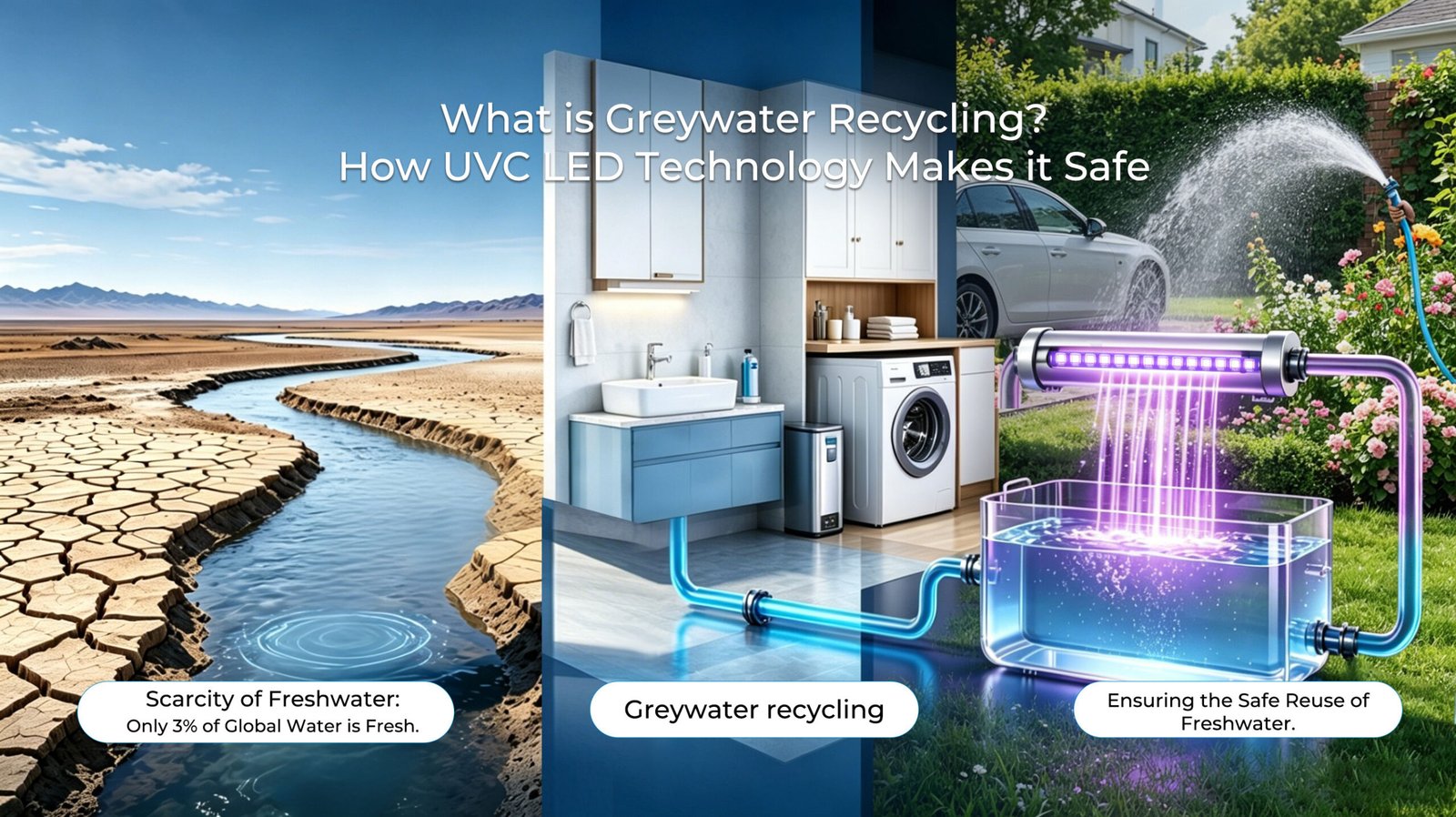
What is Greywater Recycling and How UVC LED Ensures Safe Freshwater Reuse?

Approx. 8-minute read | May 15, 2026
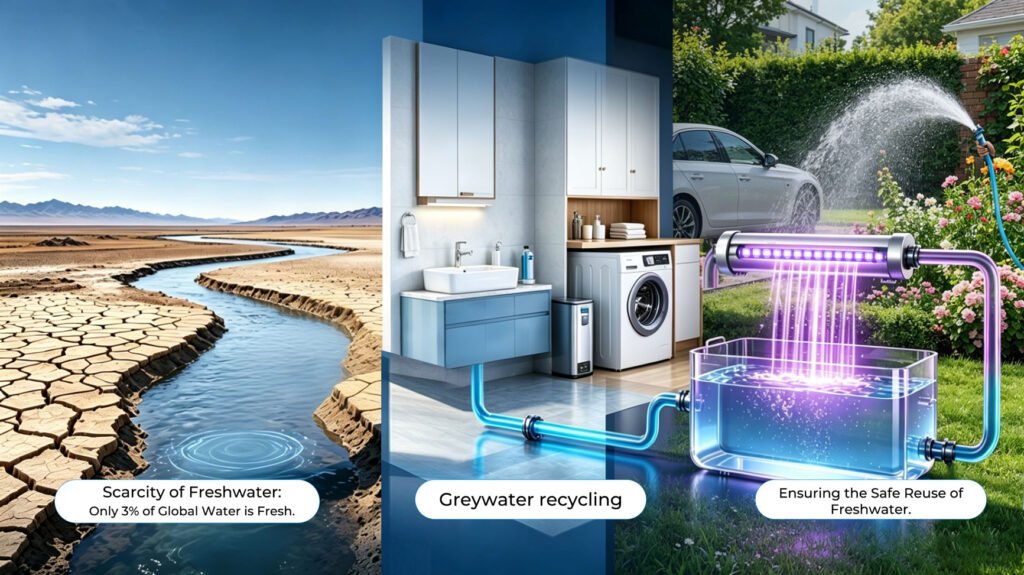
The world is facing an unprecedented water crisis. By 2025, the global water recycling and reuse market is projected to reach $17.89 billion, with a compound annual growth rate (CAGR) of 10.6% leading up to 2030. As freshwater becomes an increasingly scarce commodity, “greywater”—once overlooked—is stepping into the spotlight as a golden key to solving global water scarcity.
 
However, the core challenge of greywater recycling lies in how to efficiently and safely eliminate bacteria and viruses. Traditional chemical disinfection or mercury-based UV lamps come with significant limitations. The rapid rise of UVC LED sterilization technology is fundamentally revolutionizing the safety and economics of greywater recycling, ushering in a new era of high-efficiency, chemical-free, and sustainable water reuse.
Greywater Recycling

1. What is "Greywater"? An Undervalued Global Resource

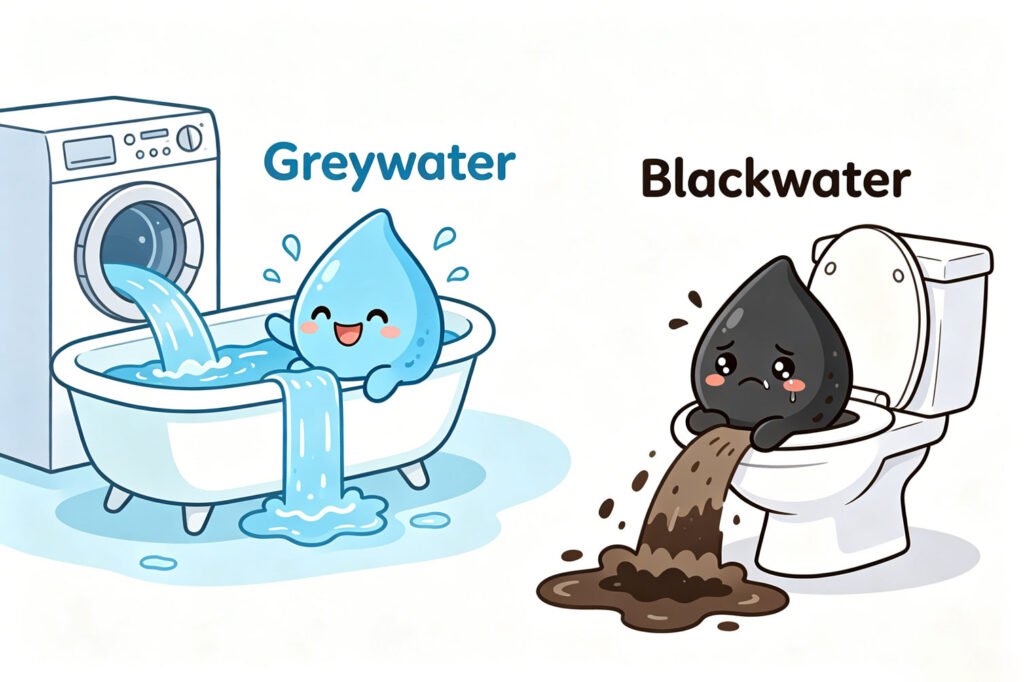
Greywater refers to lightly polluted wastewater from showers, bathtubs, bathroom sinks, and washing machines, distinct from “blackwater” (toilet waste). Compared to blackwater, greywater has a significantly lower pollution load—containing only 30% to 50% of the organic and nutrient load of total household sewage, with Biological Oxygen Demand (BOD₅) typically around 40–70 mg/L and suspended solids around 30–50 mg/L. Crucially, it is largely free of fecal coliforms and severe pathogens.
In terms of volume, the potential is immense. In the EU and high-income countries, greywater accounts for up to 75% of total household wastewater discharge. If properly treated, this stable and abundant water source becomes one of the most exploitable unconventional water resources. Effectively treated greywater can be safely reused for toilet flushing, landscape irrigation, industrial cooling, and street cleaning, maximizing the utility of every drop.
GreywaterBlackwater
 The 3 Core Advantages of Greywater:
  • Low Pollution Level: Free from high-risk fecal pollutants. Its primary impurities are hair, fibers, and minor organic matter, making it roughly one-third easier to treat than standard sewage.
  • Massive Volume: An average household generates 500-800L of greywater daily. In commercial sectors like hotels and office buildings, this volume is even higher, acting as an inexhaustible “second water source.”
  • Versatile Reuse Scenarios: Once treated to standard, it can directly replace 30%-50% of potable water consumption in non-drinking applications.
The Tangible Benefits of Recycling:
  • Cost Savings: Households can save 100-200 tons of tap water annually. Commercial buildings can reduce water costs by over 40%, while industrial parks can cut fresh water consumption by more than 60%.
  • Environmental Protection: Reduces sewage discharge, alleviates the load on municipal treatment plants, and minimizes the carbon footprint by avoiding chemical disinfectants.
  • Global Compliance: Meets the rigorous requirements of international green building certifications (such as LEED and BREEAM) and corporate ESG goals.

2. Why Rigorous Disinfection is Non-Negotiable

While cleaner than blackwater, greywater still contains soap residues, skin cells, grease, and potential pathogens like E. coli and Legionella. Reusing it without deep disinfection poses serious risks of secondary pollution to human health and the environment.

With proper treatment and disinfection, this water can be reused for applications such as toilet flushing, landscape irrigation, and cooling systems, significantly reducing reliance on potable water. Therefore, a stable and reliable disinfection technology is a critical component of any greywater recycling system.

UVC LED waterSterilization: The Ideal Sterilization Technology for Greywater Reuse

UVC LEDs emit ultraviolet light (primarily in the 260–280 nm germicidal window) that directly destroys the DNA/RNA structure of microorganisms, rendering them unable to reproduce. Compared to traditional Low-Pressure (LP) mercury lamps, UVC LEDs offer incomparable advantages:
  • Instant on/off with no warm-up: Ideal for intermittently operated greywater systems.
  • Mercury-free and environmentally friendly: Compliant with RoHS and aligned with future regulatory trends.
  • Compact and easy to integrate: Well-suited for decentralized or modular system designs.
  • Long lifespan with low maintenance costs: Reduces replacement frequency and operational complexity.
  • Smart control capability: Can be integrated with sensors and IoT systems for on-demand disinfection.

instauv’s independently developed high-efficiency UVC LED chips and modules lead the industry in these key metrics, providing a reliable core for global greywater recycling systems.

3. From Awareness to Action: Water Treatment Solutions

Traditional methods—such as boiling, chlorination, and mercury-based UV lamps—have played important roles but show limitations. Boiling cannot remove heavy metals, chlorination may produce harmful by-products, and conventional UV lamps contain mercury and require warm-up time.

As demand grows for safer, more efficient, and eco-friendly solutions, UVC LED technology has emerged as a breakthrough in water treatment.
4. The UVC LED Greywater System: A 4-Step Process to Reclaim Water

The UVC LED greywater recycling system follows a standardized “Source Separation → Multi-stage Purification → Deep Disinfection → Smart Reuse” process. Its modular design flexibly adapts to scales ranging from 1m³/day (residential) to 1000m³/day (industrial).
Core Process:
  1. Source Separation: Independent piping separates greywater from blackwater to prevent cross-contamination.
  2. Pre-treatment: Grates and hair filters remove large particles, followed by Membrane Bioreactors (MBR) or activated carbon to degrade organics and improve UV Transmittance (UVT).
  3. Fine Filtration: Microfiltration or Ultrafiltration (UF) membranes remove fine suspended solids and reduce turbidity, preventing particle shielding during disinfection.
  4. UVC LED Deep Disinfection (The Core): Water flows through the UVC LED module, where 275nm deep UV light inactivates 99.999% of microorganisms. The effluent meets stringent international reuse standards, such as the WHO Guidelines and EU Regulation 2020/741.
  5. Smart Storage & Reuse: Treated water is stored in dedicated tanks with real-time quality monitoring, automatically supplying irrigation or flushing systems.
Operational Highlights:
  • Safety First: Pure physical disinfection with zero chemical residue, safe for humans and pets.
  • Energy Saving: Modular design allows on-demand activation, cutting energy use by half compared to traditional systems.
  • Compact Footprint: Small form factor allows installation in cabinets or tight equipment rooms.
  • Maintenance-Free: 50,000-hour lifespan reduces maintenance costs by 70%.
  • Smart Control: PLC systems with sensors ensure automated operation and instant fault alerts.

5. Global Applications: The Practical Value of UVC LED Recycling

  • Residential & Apartments: Compact units treat shower and laundry water for toilet flushing and garden irrigation, saving households 30%-50% on water bills.
  • Commercial Buildings (Hotels/Malls): Centralized systems handle large volumes for cooling towers and landscape irrigation, reducing operational costs by over 40% and boosting LEED/BREEAM certification scores.
  • Agriculture & Horticulture: Disinfected greywater provides a reliable irrigation source for greenhouses and orchards, crucial for agriculture in arid regions without harming soil health.
  • Industrial Parks: Treating lightly polluted process water (e.g., equipment rinsing) allows for internal reuse, reducing industrial wastewater discharge by over 60%.

6. Global Success Stories: From Concept to Scale

Japan: Compact Integration in Residential Systems
In Japan’s high-density housing, bathwater is frequently reused for laundry. Leading heat pump manufacturers now embed compact UVC LED modules directly into hot water supply units. This ensures instant physical disinfection without the warm-up time or mercury risks of traditional lamps, proving UVC LED’s readiness for premium consumer-grade systems.
Europe: UVC LED + Ultrafiltration for Agriculture
In water-scarce regions like Murcia, Spain, municipal plants utilize a “UF + UVC LED” process. This combination consistently meets the strict EU Regulation 2020/741 for agricultural irrigation. Studies show this approach reduces costs by ~15% and CO₂ emissions by 35% compared to mercury lamp systems, making it the preferred choice for low-carbon water projects.
USA & Middle East: Driving Sustainability
From golf course irrigation in the arid US Southwest to large-scale landscaping in the UAE, non-potable water reuse is standard. As the Minamata Convention phases out mercury globally, UVC LED is becoming the critical technology for upgrading these massive water recycling infrastructures.

7. Market Trends: The Dual Boost of Policy and Technology

Global Environmental Policy
The Minamata Convention on Mercury is driving a worldwide phase-out of mercury-containing products. This international treaty is accelerating the replacement of traditional UV mercury lamps with deep UV LEDs across water treatment facilities globally.
Market Momentum
The water reuse market is expanding at a 10.6% CAGR. With the price of UVC LED chips dropping by over 57% since 2020, the technology has crossed the threshold for mass commercial adoption. instauv stays ahead of these trends, offering a complete product line from chip packaging to module integration.

Conclusion: Don't Let Greywater Go to Waste

Water is a precious, non-renewable resource. Greywater, as an accessible “second source,” is key to sustainable development. UVC LED technology breaks the bottlenecks of traditional recycling with its safety, efficiency, and eco-friendly profile.
Are you concerned about rising water costs or environmental compliance? Choosing a UVC LED greywater recycling system is a smart move for both corporate responsibility and operational efficiency.
Contact us today for a free consultation and a customized solution.

References

[1] Fortune Business Insights. UV-C LED Market Size, Industry Share | Forecast, 2026-2034.
[2] Research and Markets. Water Recycle and Reuse Market Global Forecast Report to 2030.
[3] EU Regulation 2020/741 on minimum requirements for water reuse.
[4] WHO Guidelines for the safe use of wastewater, excreta and greywater.
[5] The Minamata Convention on Mercury.

Category

Tags

Most Recent Posts

  • All Post
  • Academic Papers
  • Blogs
  • News & Events

Most Recent Porducts

Contact Us

Contact Us Form

Pure Water, Powered by Advanced UVC LED Technology

Resource Center

Blogs

FAQS

Support

Product Manual

Subscribe for Partnerships

Be the first to get our R&D updates, case studies, and engineering resources—subscribe now.

Newsletter Form (#4)

 © 2026 INSTAUV LLC. All Rights Reserved. 

Get in Touch

We’re here to help! Reach out with any questions you may have.
Contact Us Form
Edit Template