Greywater refers to wastewater from household sources like sinks, showers, baths, and laundry machines. Unlike blackwater from toilets, greywater has lower contamination levels but still requires treatment for safe reuse in non-potable applications such as toilet flushing or irrigation. Proper greywater management conserves freshwater, reduces sewage loads, and supports sustainable water cycles in residential, commercial, and public settings.
By recycling and reusing grey water, dependence on freshwater resources can be significantly reduced, especially in drought-prone or water-stressed regions.
It decreases the volume of wastewater entering municipal sewer systems, thereby lowering the operational burden and costs of wastewater treatment plants.
Compared to extracting, transporting, and treating large volumes of freshwater, on-site grey water treatment can substantially reduce energy consumption and carbon emissions.
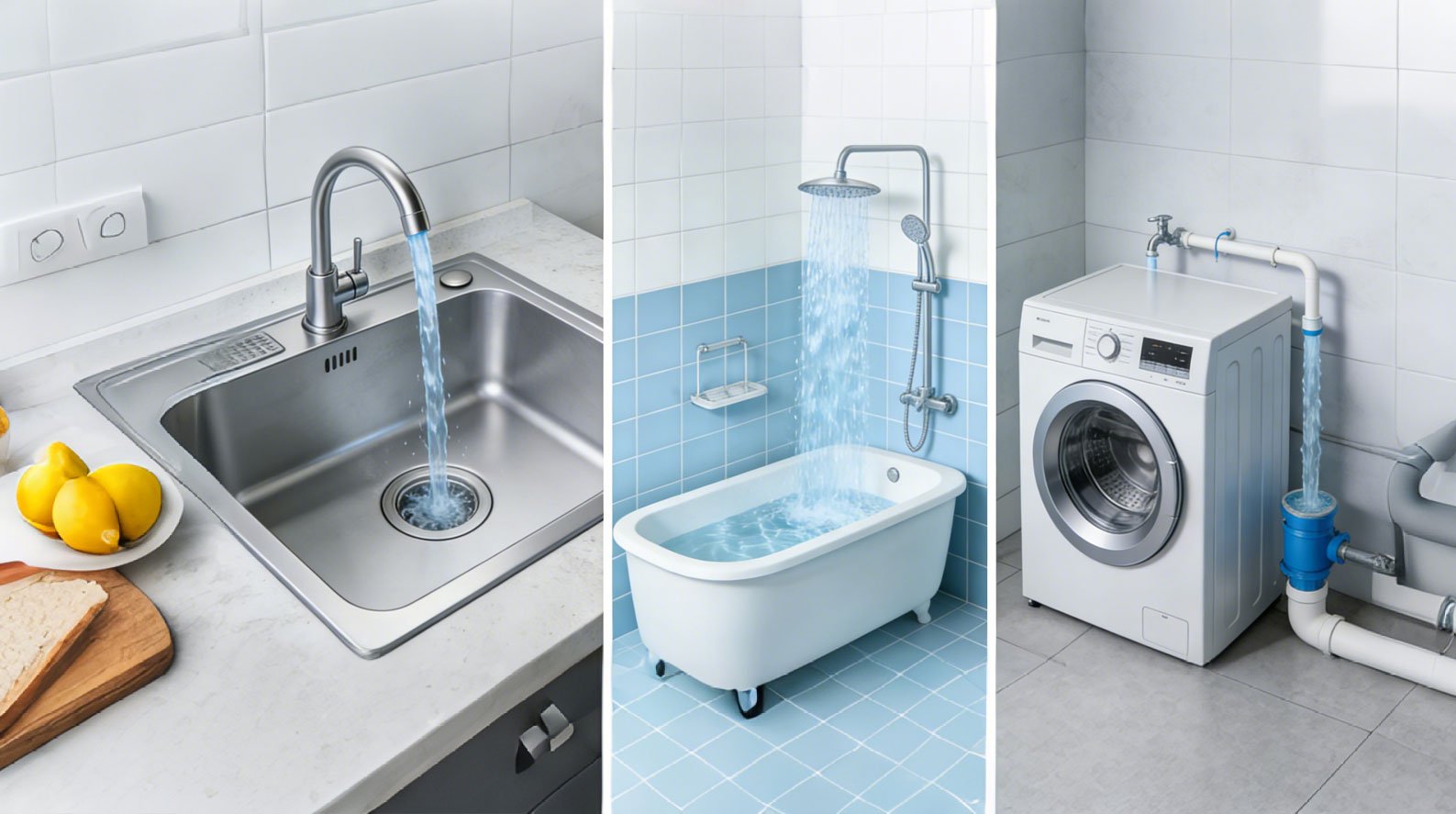
Greywater is non-toilet wastewater from households or buildings, comprising 50-80% of indoor water use in homes and up to 75% in commercial settings. It arises mainly from daily activities and holds high reuse potential, with a typical household generating about 120L daily, equating to thousands of tons annually for larger buildings.
Shower and bathtub drainage (largest volume, least polluted).
Sink and basin drainage.
Washing machine drainage (contains detergents, fibers, and minor microorganisms).
Dishwashing and vegetable washing water (contains grease and food residues, requiring pretreatment).
Handwashing and cleaning drainage from commercial buildings; domestic wastewater from ships and RVs.
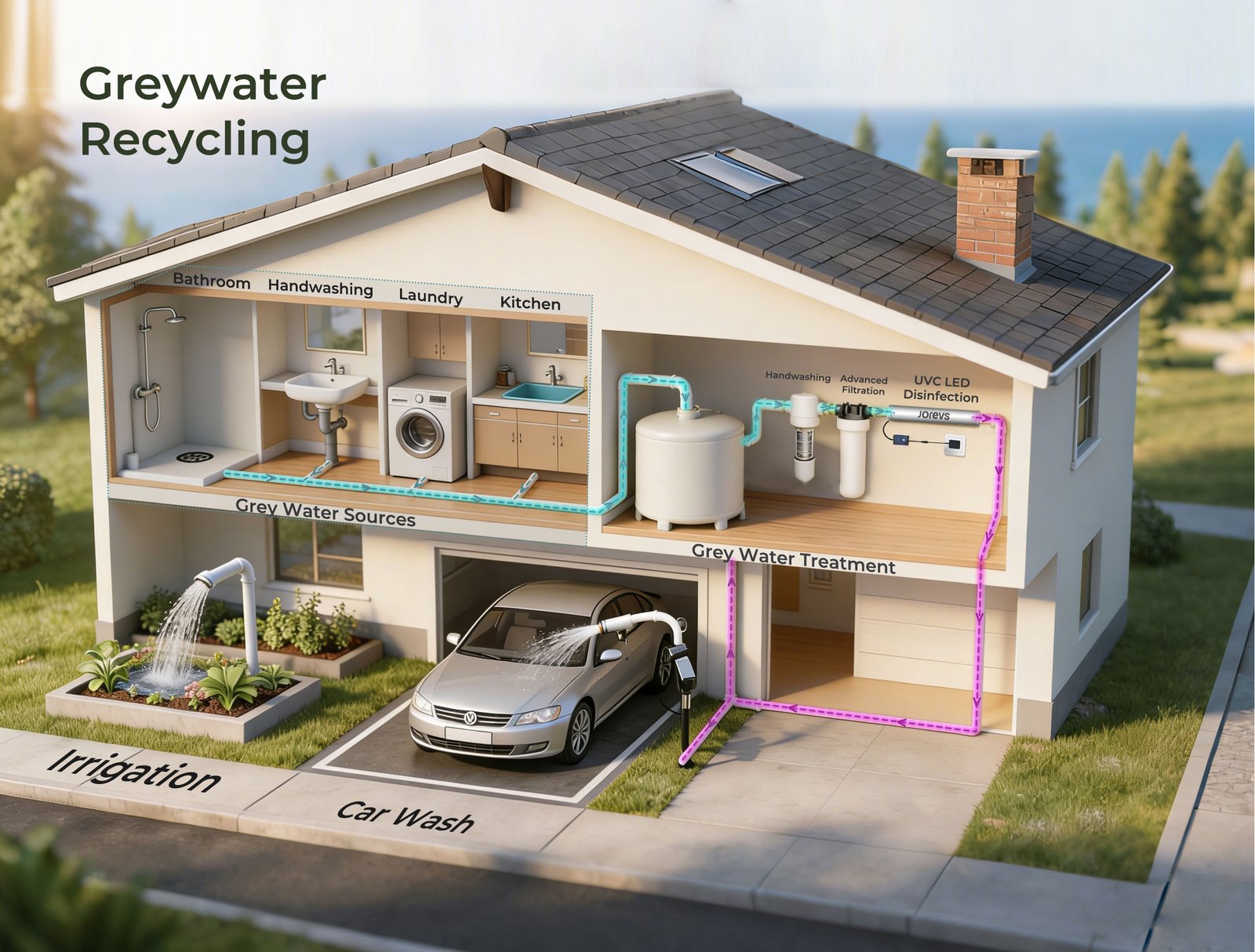
UVC LED technology serves as the final disinfection stage in greywater systems, following filtration to remove particulates. Its 200-280nm ultraviolet light inactivates bacteria, viruses, and pathogens by damaging their DNA/RNA, ensuring safe reuse in flow-through setups.
In greywater treatment processes, the typical stages include physical filtration (to remove suspended solids), biological treatment (to degrade organic matter), and final disinfection (for sterilization). UVC LED is mainly used in the final disinfection stage.
Hair filter → Oil separator → Sedimentation / Sand filter (removes suspended solids, grease, and large particles).
PP cotton / Activated carbon / Ultrafiltration (removes fine particles, organic matter, and odors).
270–280 nm UV irradiation, inactivating 99.999% of bacteria and viruses (e.g., E. coli, Staphylococcus aureus, coronavirus) within 0.2 seconds.
After meeting standards, the treated water is reused for non-potable purposes such as toilet flushing, irrigation, road cleaning, and equipment cooling.
Ultraviolet (UV) disinfection technology uses specific wavelengths of ultraviolet light to destroy the DNA structure of microorganisms in water, causing them to lose their ability to reproduce and survive, thereby achieving instant sterilization. The entire process is purely physical and does not add any chemical substances.
It can effectively kill the vast majority of waterborne pathogens, including Escherichia coli (E. coli), Staphylococcus aureus, Legionella, and various viruses.
Our UVC LEDs are completely mercury-free, eliminating the risk of hazardous material contamination and aligning with global environmental standards.
Unlike traditional lamps that require a warm-up period, UVC LEDs reach full power instantly. This ensures maximum disinfection efficiency from the moment water starts flowing.
With a robust solid-state design, UVC LEDs have a much longer operational life (often exceeding 15,000 hours) and are more resistant to breakage and frequent on/off cycling.
These benefits outperform traditional mercury lamps, especially in decentralized applications.
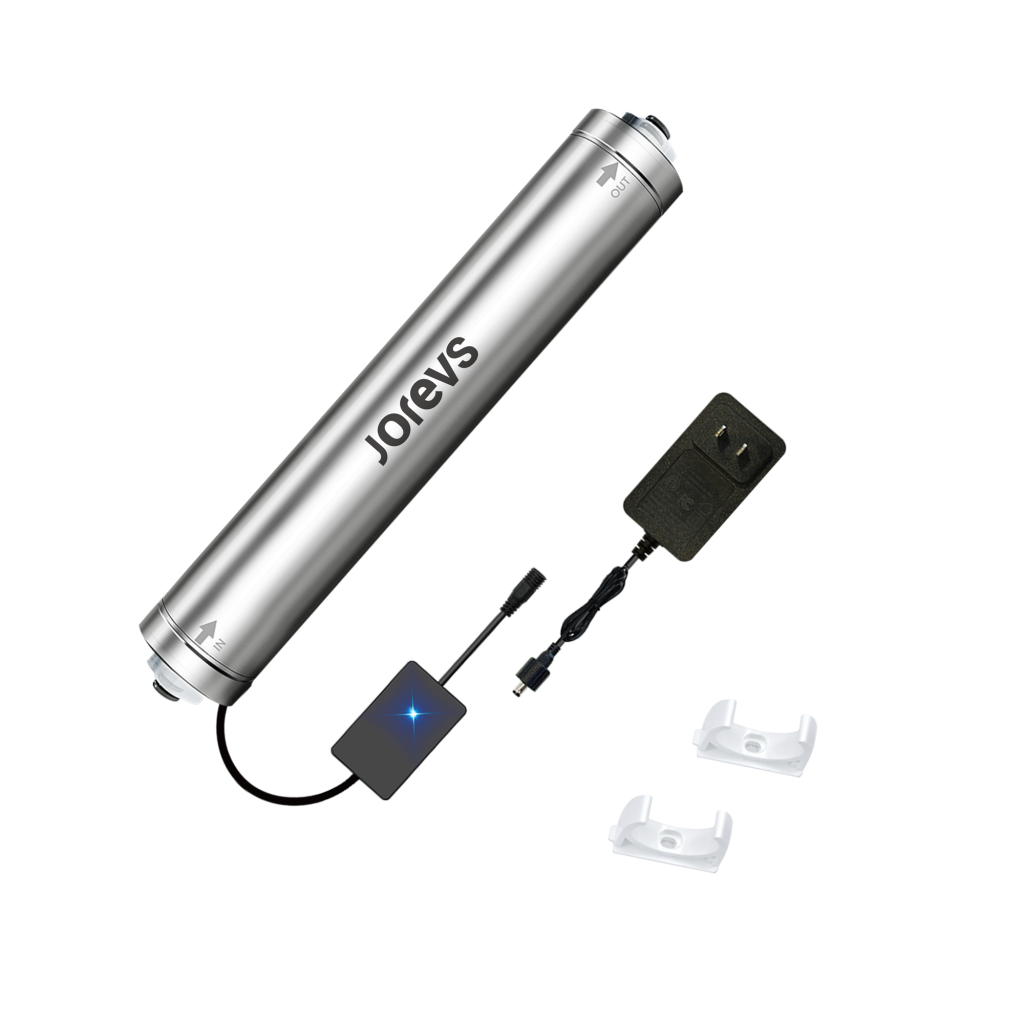
No chemicals. No mercury. No compromises.
Microbial Reduction
Operational Hours
From residential complexes and hospitality venues to public buildings and commercial parks, treated greywater is safely reused for non‑potable demands such as toilet flushing, landscape irrigation, and cooling, cutting mains water consumption and supporting long‑term sustainability targets.
Be the first to get our R&D updates, case studies, and engineering resources—subscribe now.
© 2026 INSTAUV LLC. All Rights Reserved.
We’re here to help! Reach out with any questions you may have.

